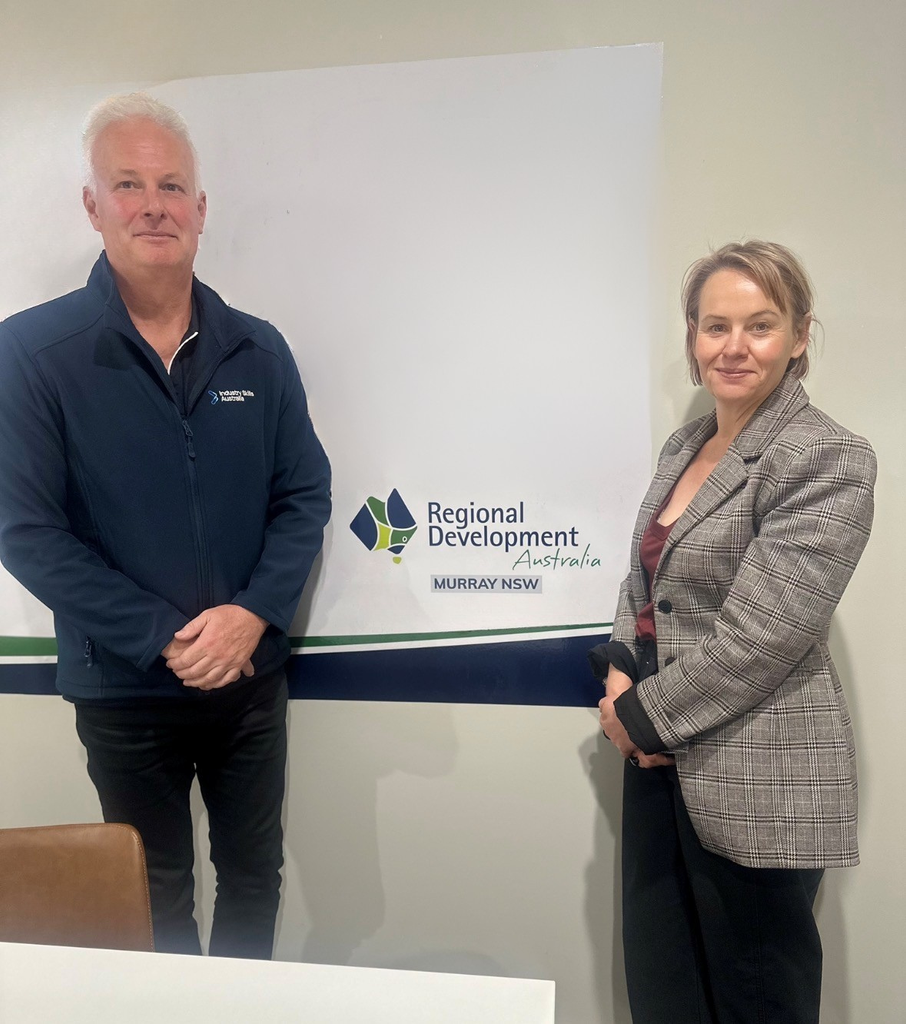
Industry Skills Australia (ISA) recently visited the Albury-Wodonga region to engage with key organisations driving workforce development, innovation and economic growth across southern New South Wales and northern Victoria. The visit highlighted the importance of collaboration between industry, education and government in addressing workforce challenges and preparing for the future of Australia’s transport and logistics sector.
Investing in Skills Through Innovation
A key highlight of the visit was attending the official opening of the Logic Innovation Precinct at the Northern Victoria Institute of TAFE (NVITAFE) in Barnawartha North. More than 250 representatives from government, industry and education gathered to celebrate the opening of the new facility, made possible through a $35 million investment in workforce development and innovation.
Designed to support industries including transport and logistics, advanced manufacturing and automation, the precinct represents a significant step forward in building the skilled workforce required for Australia’s future supply chains and freight networks.
The facility brings together education, industry engagement and cutting-edge technology, providing students with access to advanced manufacturing laboratories, robotics and automation training, data and cyber technology capabilities, additive manufacturing facilities and enhanced heavy vehicle training resources.
A strong focus of the precinct is preparing students for the increasingly technology-driven transport and logistics sector. Through practical, industry-aligned training, students will develop skills in automation, digital technologies, data analytics and advanced operational systems that are becoming essential across modern freight and supply chain operations.
The Logic Innovation Precinct demonstrates the value of investing in innovative education and training pathways that respond to industry needs and support long-term workforce growth.
Supporting Regional Growth and Workforce Development
ISA also met with Sarimah Hellyer, CEO and Director of Regional Development Australia (RDA) Murray, to discuss regional priorities, workforce development and future opportunities across southern New South Wales.
RDA Murray plays a vital role in supporting economic development, investment attraction and workforce growth throughout the Murray region. Working closely with industry, businesses, local communities and all levels of government, the organisation helps identify regional challenges, foster partnerships and support initiatives that strengthen local economies.
As part of the national Regional Development Australia network, RDA Murray facilitates collaboration between key stakeholders while advocating for regional priorities and projects that support employment, investment and long-term prosperity.
Discussions focused on regional workforce opportunities and challenges, as well as the importance of coordinated approaches to ensure communities and industries have access to the skills and talent needed for future growth.
Understanding Industry Workforce Needs
During the visit, ISA also met with John Herring, General Manager of Daimler Trucks Albury, to gain insights into the operations of the heavy vehicle dealership, and the workforce challenges facing the transport industry.
Located alongside the Hume Highway, Daimler Trucks Albury specialises in the sales, servicing and parts support of Mercedes-Benz, Freightliner and Fuso vehicles. The site includes a large service centre, heavy vehicle workshops, truck wash stations, trailer storage and an extensive parts warehouse that supports transport operators across the region.
A key focus of the discussion was workforce attraction and retention. Like many businesses across the transport and logistics sector, Daimler Trucks Albury continues to face challenges in sourcing skilled employees to meet industry demand.
The business is addressing these challenges through a range of workforce strategies, including engaging diverse talent pools, utilising skilled migration pathways and strengthening relationships to build future workforce pipelines.
The importance of employee retention was also highlighted, with discussions focusing on career development opportunities, supportive workplace practices and creating clear pathways for people to enter and progress within the industry.
The meeting provided valuable insight into both the operational requirements of a major heavy vehicle dealership and the practical workforce solutions being implemented to address current and future skills needs.
Building the Workforce of the Future
Collectively, these engagements reinforced the critical role that collaboration plays in strengthening Australia’s workforce. From innovative education and training facilities to regional development initiatives and employer-led workforce strategies, each organisation is contributing to the development of a skilled, adaptable workforce capable of supporting the future growth of the transport and logistics sector.