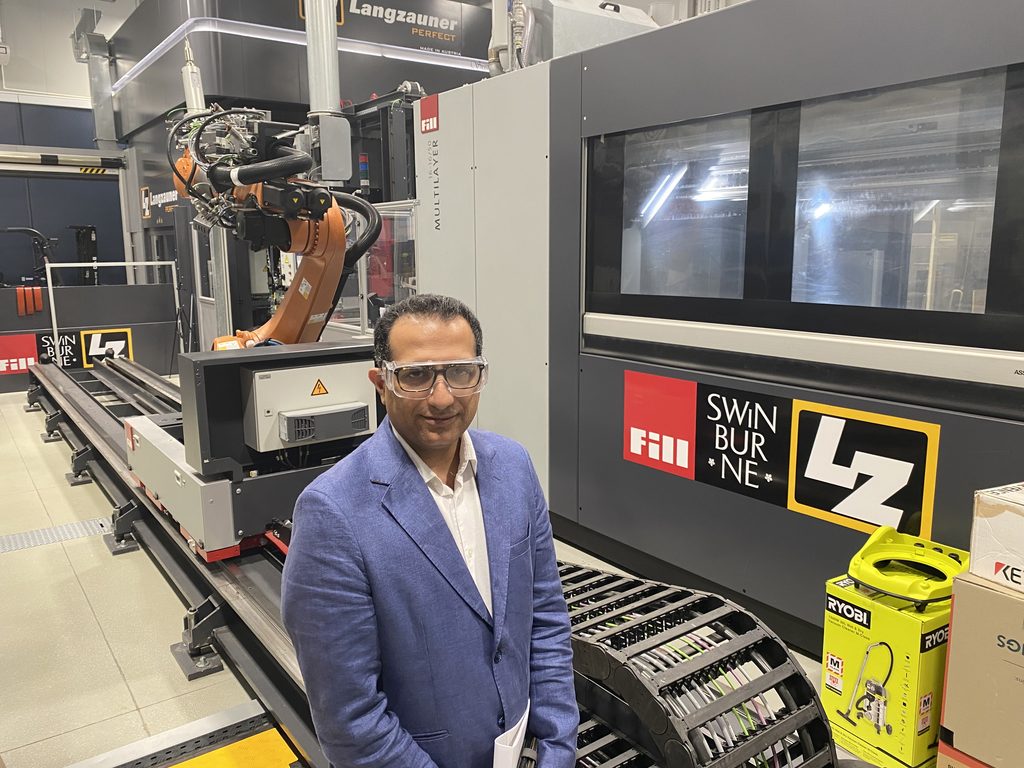
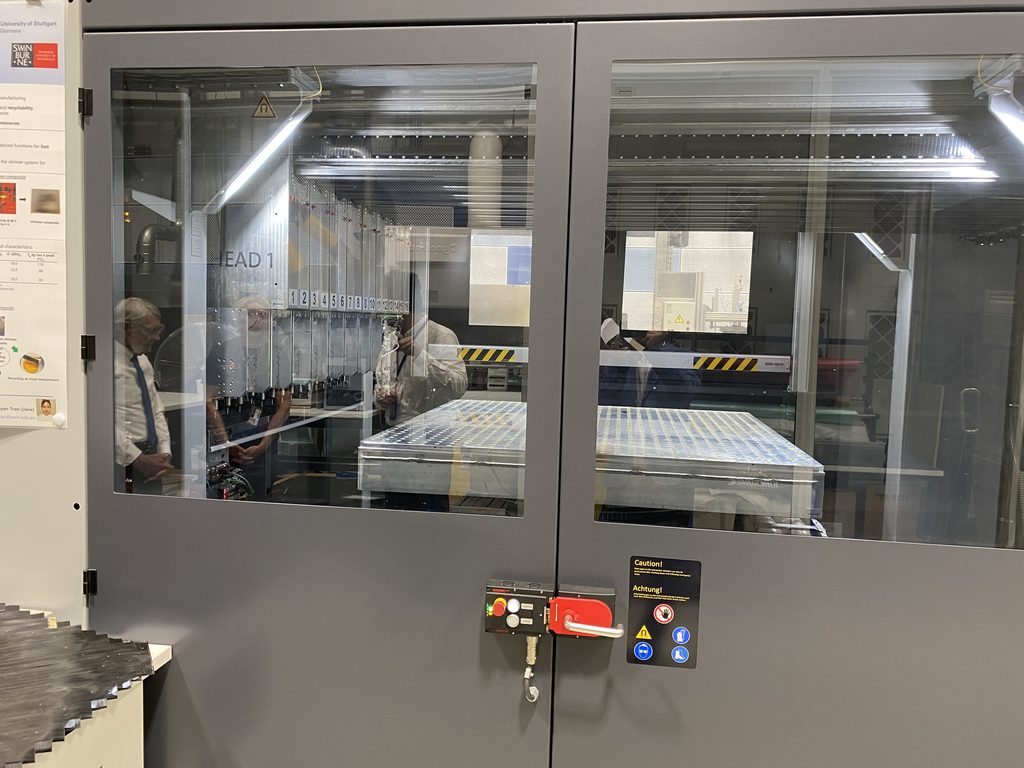
The CSIRO-Swinburne University of Technology National Industry 4.0 Testlab in Clayton, Victoria, recently welcomed Industry Skills Australia’s (ISA) Industry Engagement Manager for Aviation, Mori Hajizadeh, for a firsthand look at how advanced manufacturing technologies are transforming aviation and aerospace production.
The visit showcased emerging technologies and manufacturing processes that are reshaping workforce skill requirements across aviation, aerospace, Advanced Air Mobility (AAM) and Unmanned Aerial Vehicles (UAVs). From advanced composite manufacturing and automation to data-driven production systems, the facility demonstrated how digital technologies are changing the way aircraft and aerospace components are designed, manufactured and maintained.
Mori was invited to visit the Testlab to gain insights into the emerging skills and workforce capabilities that will be required as advanced manufacturing technologies become more prevalent across aviation and aerospace supply chains.
The National Industry 4.0 Testlab is one of a small number of Industry 4.0 facilities established across Australia to help businesses adopt advanced manufacturing technologies, improve productivity and strengthen competitiveness. The facility showcases how digital technologies, automation, data analytics and advanced materials can be integrated into modern production systems.
A key highlight of the visit was observing the advanced composite manufacturing technologies being developed and demonstrated at the facility. Composite materials are increasingly important in aviation and aerospace due to their high strength, low weight and durability. These materials are used extensively in modern aircraft, AAM platforms and UAVs, where reducing weight can improve fuel efficiency, performance and operational capability.
One of the most striking examples of Industry 4.0 in action was the use of highly automated manufacturing systems capable of producing composite components in a fraction of the time required through traditional methods. Processes that previously relied on extensive manual labour and could take many hours, or even a full day, can now be completed in as little as 15 to 20 minutes. In addition to increasing productivity, automation helps deliver greater consistency in quality while reducing waste, costs and the potential for human error.
The visit also highlighted the growing importance of data in advanced manufacturing. Equipment throughout the production process captures significant volumes of information, including machine performance, production variables and environmental conditions such as temperature. This data can then be analysed to identify factors that may influence final product quality and continuously optimise manufacturing performance.
Importantly, discussions throughout the visit reinforced that automation is not eliminating the need for people. Rather, it is changing the nature of work and increasing demand for new capabilities. As advanced manufacturing technologies become more prevalent across aviation and aerospace supply chains, workers will require stronger skills in digital literacy, data analytics, artificial intelligence, automation systems, robotics, advanced materials and equipment maintenance, alongside traditional engineering and technical competencies.
For the aviation sector, the implications are clear; technology adoption and workforce development must progress together. Ensuring that Australia’s training and education systems keep pace with technological change will be critical to building a workforce capable of supporting the next generation of aviation and aerospace manufacturing.
The visit also provided an opportunity to discuss emerging workforce requirements with Mohana Ryan from the Manufacturing Industry Skills Alliance (MISA), including MISA’s work on AAM skills gap analysis and workforce needs from a manufacturing perspective.
ISA extends its thanks to Pat Burka and Peter Smith for organising the insightful site visit and facilitating valuable discussions on the future of advanced manufacturing and workforce capability development. The visit reinforced the importance of collaboration between industry, education and skills stakeholders to ensure Australia’s workforce is prepared for the opportunities and challenges of Industry 4.0.
If you would like to read more about the ISA’s project, see here: Advanced Air Mobility Skills Gap Analysis – Industry Skills Australia